LAFERIA presents EU-wide classification of high-intensity agricultural systems at ECCB 2026
Where in the European Union is farming at its most intensive, and how can knowing this help bring landscape features (LFs) back to agricultural land? LAFERIA took these questions to the 8th European Congress of Conservation Biology (ECCB 2026) in Leiden, the Netherlands, on 9 July 2026.
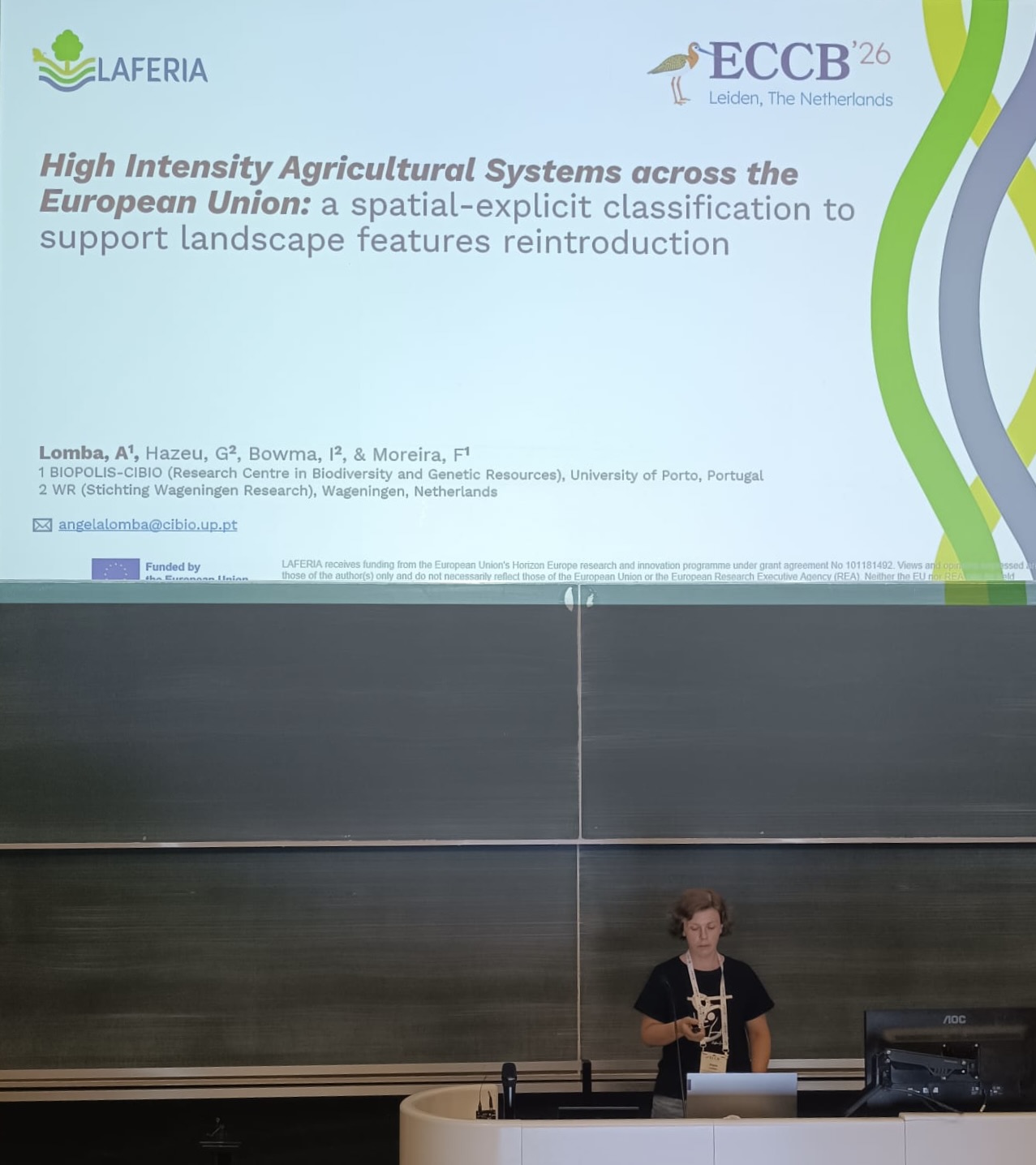
Project partners BIOPOLIS and Wageningen University & Research (WUR) shared a milestone result with around 40-50 researchers and academics in a presentation titled High-Intensity Agricultural Systems across the European Union: a spatial-explicit classification to support LFs reintroduction, authored by Angela Lomba, Gerard Hazeu, Irene Bouwma, and Francisco Moreira.
Twenty-four systems on the map
The results stem from LAFERIA’s work on classifying agricultural systems across the EU.
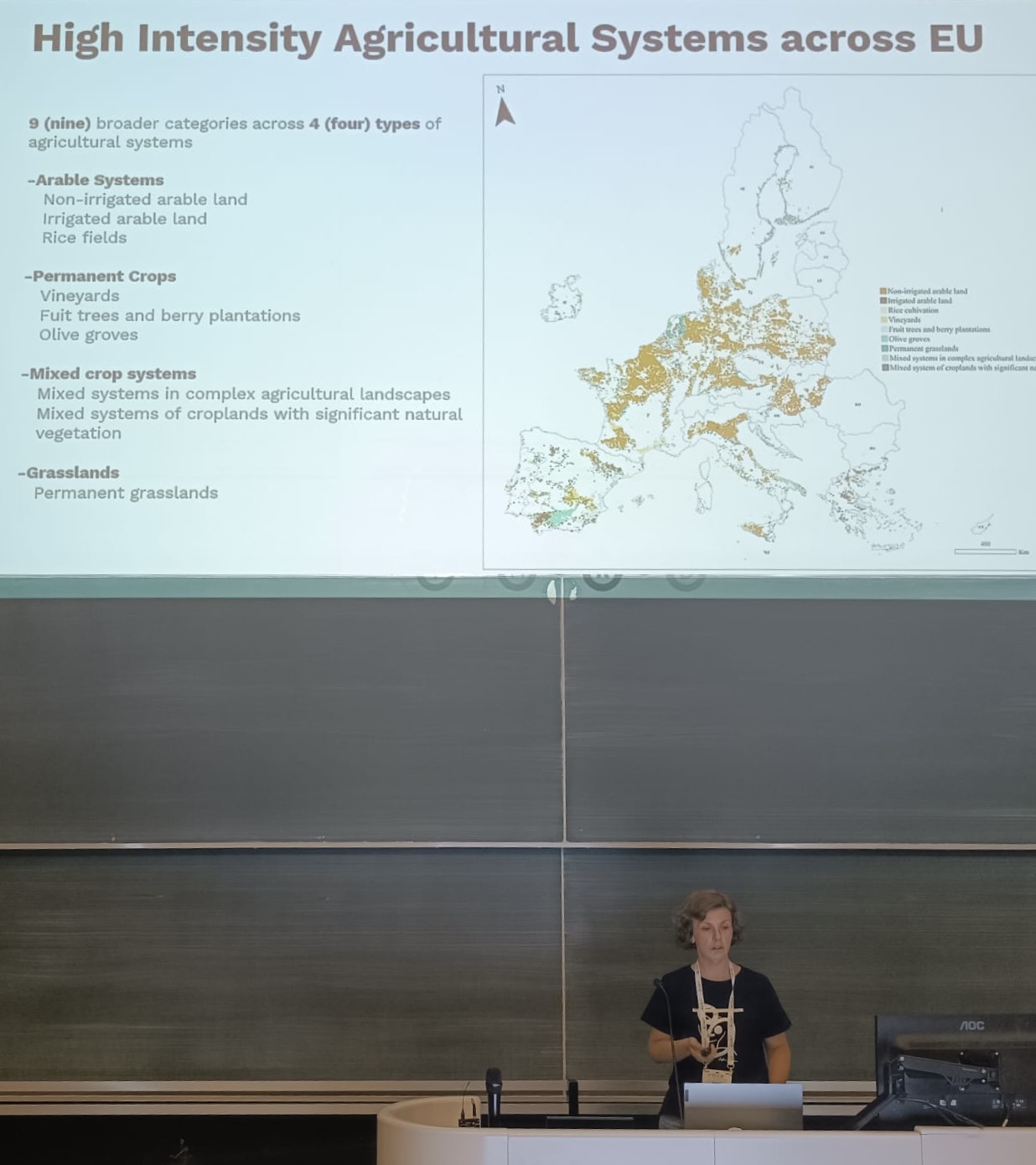
At its heart is a spatially explicit approach, meaning each system is tied to where it is found on the ground. Using it, the team identified 24 High Intensity Agricultural Systems (HIAS) and presented maps of each, along with their characterisation.
More than one use
The classification was built to support the reintroduction of LFs, but its value does not stop there. It can also inform other environmental assessments targeting agricultural landscapes.
The presentation showed how useful the approach and its outcomes are for environmental assessments at EU scale, and how they could be transferred to other scales. In this way, the work supports multi-objective environmental assessments in agricultural landscapes.
Sparking new collaborations
The talk opened a discussion on how the classification could be applied in other socio-ecological contexts. Feedback was positive, particularly around potential applications in other research projects, and potential collaborations were established along the way.
Curious to see where this work goes next? Stay tuned and follow LAFERIA on LinkedIn and Bluesky.